
The Challenge of Facing Reality in Endling
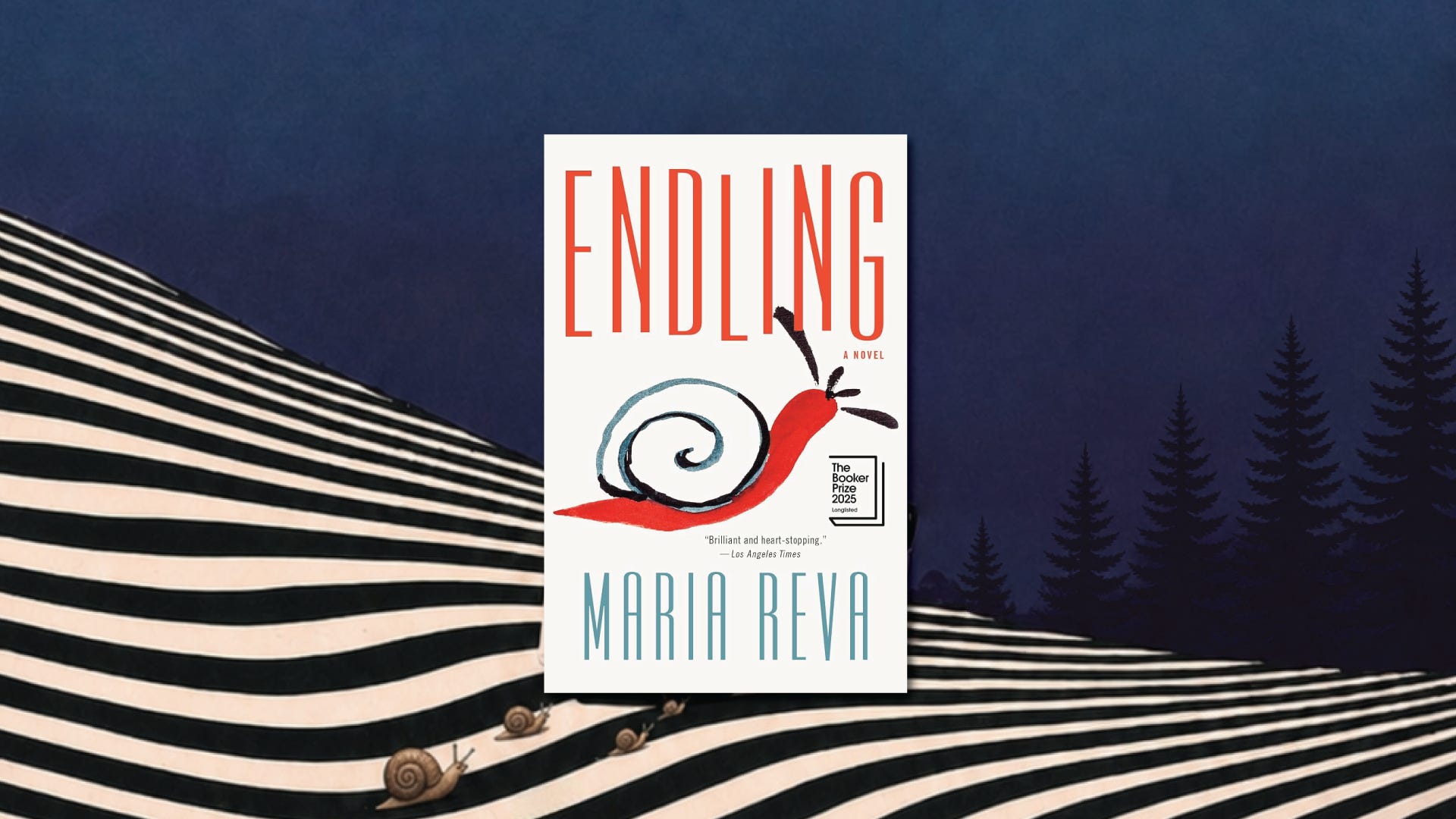
Endling is an interesting novel that explores the process of grappling with tragedy and portrays clearly the problems that can result when one avoids facing reality, but with a touch of surrealism.

This is not a review. See why.
Context
Yeva is a snail conservationist in Ukraine; she travels around the country and collects endangered species to study and breed in her mobile lab. She has long since given up on the long and complex processes of getting government grants to fund her work; she now funds her own research by participating in “romance tours.” Essentially, she is paid to attend events organized by a marriage agency formed to help Western men look for Ukrainian brides, as well as to go on dates with them. Through these events she meets Nastia, who wants to borrow Yeva’s mobile lab to pull a publicity stunt against the romance tour industry by kidnapping several men on the tours (“bachelors”), keeping them in the lab long enough to become a bit panicked, then having them record a video message to post online. Nastia had only joined the romance tours to enrage her mother, a prominent feminist activist who had abandoned her and her sister when they were in their late teens and disappeared. Reluctantly, Yeva agrees.
One of the bachelors they kidnap is Pasha, who was born in Ukraine but whose parents moved with him to Canada when he was young. A socially awkward engineer, Pasha has always struggled with his confidence around women. He imagines that back in the country of his birth, he will magically find a woman who perfectly suits him, and will not face the same difficulties he has always had.
The kidnapping starts off smoothly, with the bachelors being lured into the mobile lab peacefully and driven hours from Kyiv—when the full-scale Russian invasion abruptly halts their plans. Then all three must wrestle with their personal demons in the middle of a life-threatening crisis.
A Note on the Title: An endling is the last known member of a species or subspecies. Yeva mourns the deaths of many snail endlings throughout the novel.
Key Ideas (Overall evaluation: good)
Fear that one has failed can lead to risky decisions
Living in fantasies will keep you from appreciating the real world
Building narratives around tragedy can be a means of evading or of processing
Fear that one has failed can lead to risky decisions
We can be motivated to act by a desire to achieve something—or by fear of losing something or failing. When a person believes he or she has already failed, particularly in a significant way, this can lead to a deep and almost absurd level of desperation in order to claw back the identity or value he or she seems to have lost. We see this in all three main characters in Endling. Yeva only agrees that her mobile lab can be used for the kidnapping because she feels she has failed as a conservationist and had already begun the process of shutting it down. Pasha spent more than he could afford and abandoned his job to come to Ukraine on the romance tour because he felt he had failed romantically. But perhaps the most desperate is Nastia, who feels she has failed as a daughter. She devises the audacious kidnapping plan because she thinks that it will take something that dramatic to get her mother’s attention.
When we are driven by the motivation to achieve a positive value, we tend to need encouragement or courage to take risks. Think of all the motivational advice around “dreaming big” and “shooting for the moon.” When we want something we don’t currently have, it is often the case that our existing self-esteem isn’t threatened by its lack because it’s not part of our self-image yet (hence the need for motivation). But when we fear we have failed, our self-esteem is on the line. If you don’t feel capable of functioning in the world (including socially) or morally good, you ultimately don’t feel up to living. This is an awful place to be in, and many people will do almost anything to avoid it. Hence, when Yeva feels she has failed in her vocation and Pasha feels he has failed to connect with anyone romantically and Nastia feels she has failed as a daughter, all three are willing to take drastic steps to avoid or “fix” the failure—regardless of the obvious risk involved.
Living in fantasies will keep you from appreciating the real world
Part of the reason Yeva, Pasha, and Nastia feel they have failed is because they spend more time on fantasies than in the real world. Yeva imagines herself as an infallible savior rather than focusing on the snails she loves and the achievements she has accumulated. Pasha builds fantasies around women he doesn’t know, such as a jogger whose daily route overlaps with his, such that when he actually speaks to these women, the version he has created in his mind jars so obviously with the reality that he panics. And Nastia imagines herself as a woman her mother would be fiercely proud of rather than thinking about the kind of woman she is and wants to become. Through the events that bring them together, all three eventually realize that by focusing on the reality in front of them (snails, speaking to women, or one’s own values and strengths), they can discover how to be happy—even if that doesn’t look quite the way they had imagined it would.
Building narratives around tragedy can be a means of evading or of processing
Being in the midst of such a horrific event as the full-scale invasion of Ukraine naturally has huge emotional impacts on all of the characters, but what is unusual in this novel is that we see both the characters and the author struggle with how to mentally frame the event. None of the characters can surrender to the fear, horror, and grief that are the natural response to finding oneself in a warzone (at least, not for long). Their values and goals still exist; as the novel’s pre-quote puts it, “People don’t live history, they live their lives. History is a catastrophe that passes over them” (Chus Pato). Perhaps the clearest example of this is Pasha, who at first is paralyzed with horror upon seeing a corpse. He then constructs a narrative: After the misery, he will have “stepped through the flames of war reforged” and “the terror of the past few days [will have] crystallized into a grand lesson, or a love story” (266). This vague but reassuring notion bows to reality when he flees Russian soldiers, but then he is inspired by the Ukrainian resistance and joins it. By throwing off a fantasy and focusing on what’s in front of him, he forges a path rather than allowing the world to act on him.
There is another layer to this novel, however. Occasionally it is interrupted by reflections from the author on her own writing and career, including her inner turmoil about watching the war from a distance as a Ukrainian expat. Some of these reflections are done through the use of an extended metaphor designed to create an “objective observer” who speaks with the author and Nastia’s mother. At other times too, the reality of the author’s fear for her grandfather in Kherson mixes with Nastia’s and Yeva’s storylines. The overall effect is jarring, but it does serve a purpose. An author writing a novel about a war she is not quite sure how to relate to is the ultimate case of constructing a narrative around a tragedy. Yet in these reflections, one can see how she is working to keep reality and her emotion-fueled fantasies separate in order to see clearly. In writing about her grandfather in Kherson, she struggles to recall the details of his apartment, concluding a brief chapter entitled “Correctly This Time” with “If I get the details just right, my grandfather will leave Kherson” (297). As she observes, it is extremely tempting to try to impose some sense of order or control over something that in fact is nonsensical and out of our control; a war is perhaps the prime example of such a situation. But if one keeps fact and fiction separate, the building of these narratives can offer a helpful framing.
The Vibe
The tone vacillates between cynical—particularly in Yeva’s and Nastia’s early chapters and passages dealing with the romance tour industry—and raw. Grappling with one’s deepest fears and how they’re affecting one’s behavior requires radical honesty and a willingness to examine emotions that one may feel ashamed of. But this is what the main characters do. The interruptions of the author’s reflections, as well as the utter shock of the full-scale invasion, create an almost surreal mood that underlies much of the novel as well.
Conclusion
Endling is an interesting novel that explores the process of grappling with tragedy and portrays clearly the problems that can result when one avoids facing reality in a futile attempt to salvage a pretense at self-esteem. However, its unusual device and notes of surrealism mean it will not be to every reader’s taste.